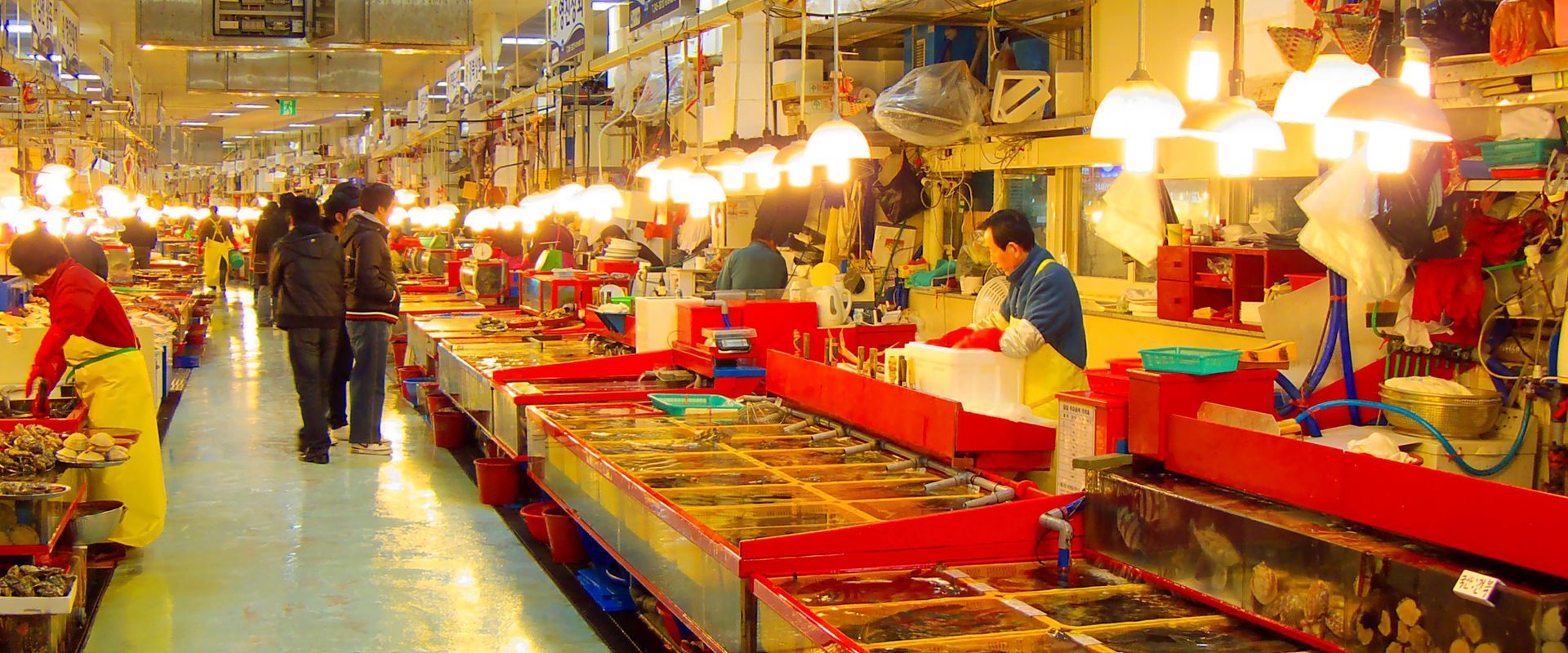
Most people arrive at Jagalchi in the early afternoon, walk the length of the indoor hall, photograph a tank of live fish and leave. That visit is not wrong. It is just the second half of the day, after the part that made the place.
The market runs 05:00 to 22:00. At the front of that window it is a wholesale floor — boxes moving, ice going down, prices being settled between people who have done it before. By two in the afternoon it has become something gentler and more explicable, and the difference between those two markets is most of what there is to say about Jagalchi.
The name is an argument about gravel
Jagal means gravel, and the shore here was covered in it before any of this was built. The other explanation is that the fish sold here tended to end in -chi, like myeolchi and galchi. It is a joke that only works if you sell fish for a living, which is presumably why the people who sell fish here keep it alive.
Busan's own tourism office gives the gravel reading first and the pun second, and declines to settle it. Nobody has to. That both survive on official signage tells you something about how the place regards its own history.
What the war left
Fish stalls appeared along this stretch during the Japanese occupation. What turned them into a market was the Korean War.
Busan was the provisional capital, refugees arrived faster than the city could absorb them, and shanty housing went up along the waterfront. Selling fish needed no premises and no capital, so people sold fish. The stalls multiplied until they were a market, and the market never went anywhere.
The vendors were, and largely still are, women. They are called Jagalchi ajumma — a term that started as plain description and is now the market's own name for itself. If you read one thing about Jagalchi before you go, read that: the place was built by women who had lost everything else and it is still theirs.
What you are actually looking at
There are two markets sharing a name, and knowing which one you are in makes the visit legible.
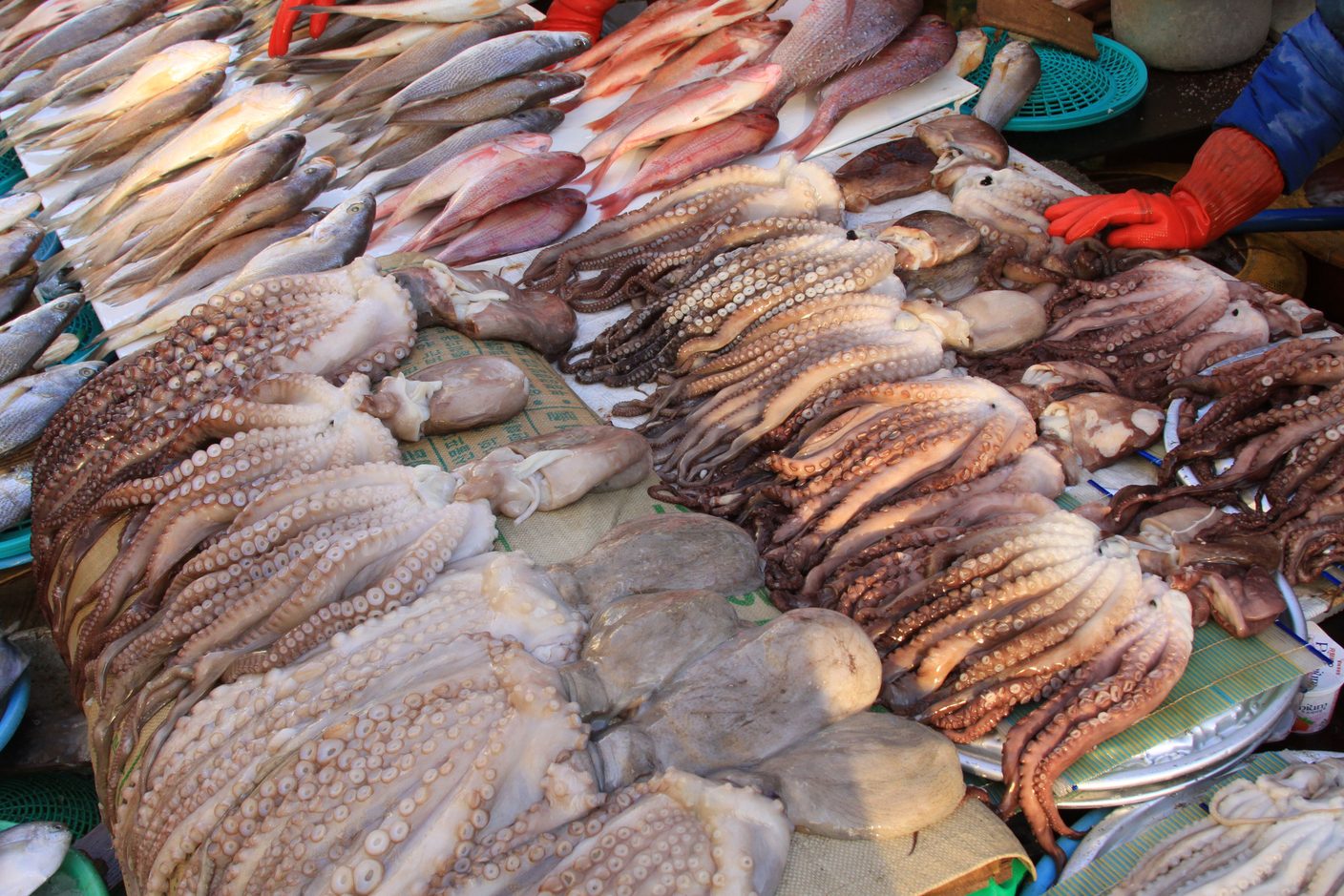
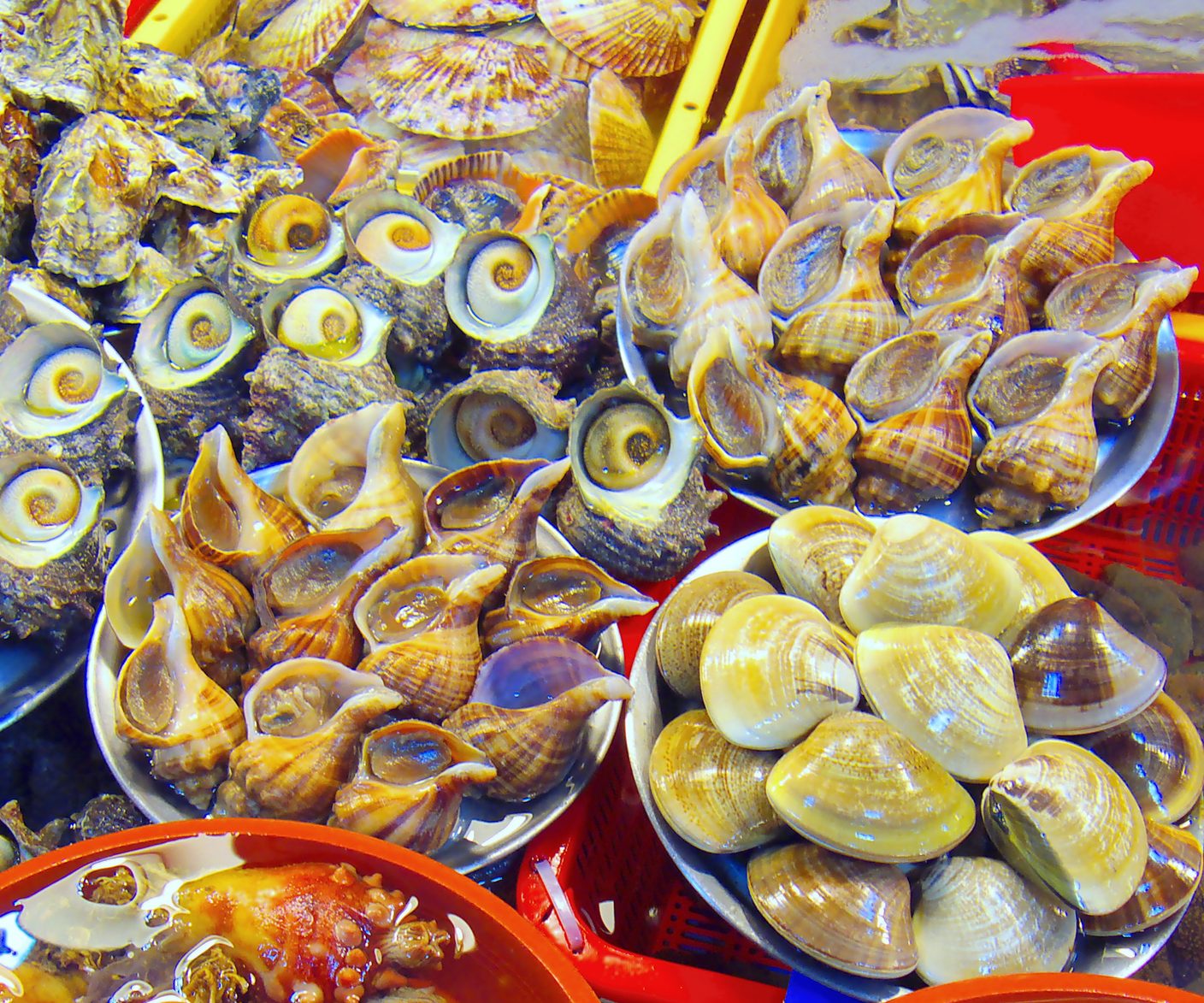
- The outdoor stalls. Parasols, narrow lanes, seafood on trestles at street level. This is the older market and it behaves like one — things are sold by the tray, and the pace belongs to the sellers.
- The indoor hall. A modern building with tanks along both sides. Cleaner, easier, and where most first visits happen.
- The building itself. Its three wings are meant to read as a seagull: doyak — leaping from the land; bisang — rising into the sky; hwalgong — gliding across it. The market's own literature says so. Once you know, it is hard to unsee from the water side.
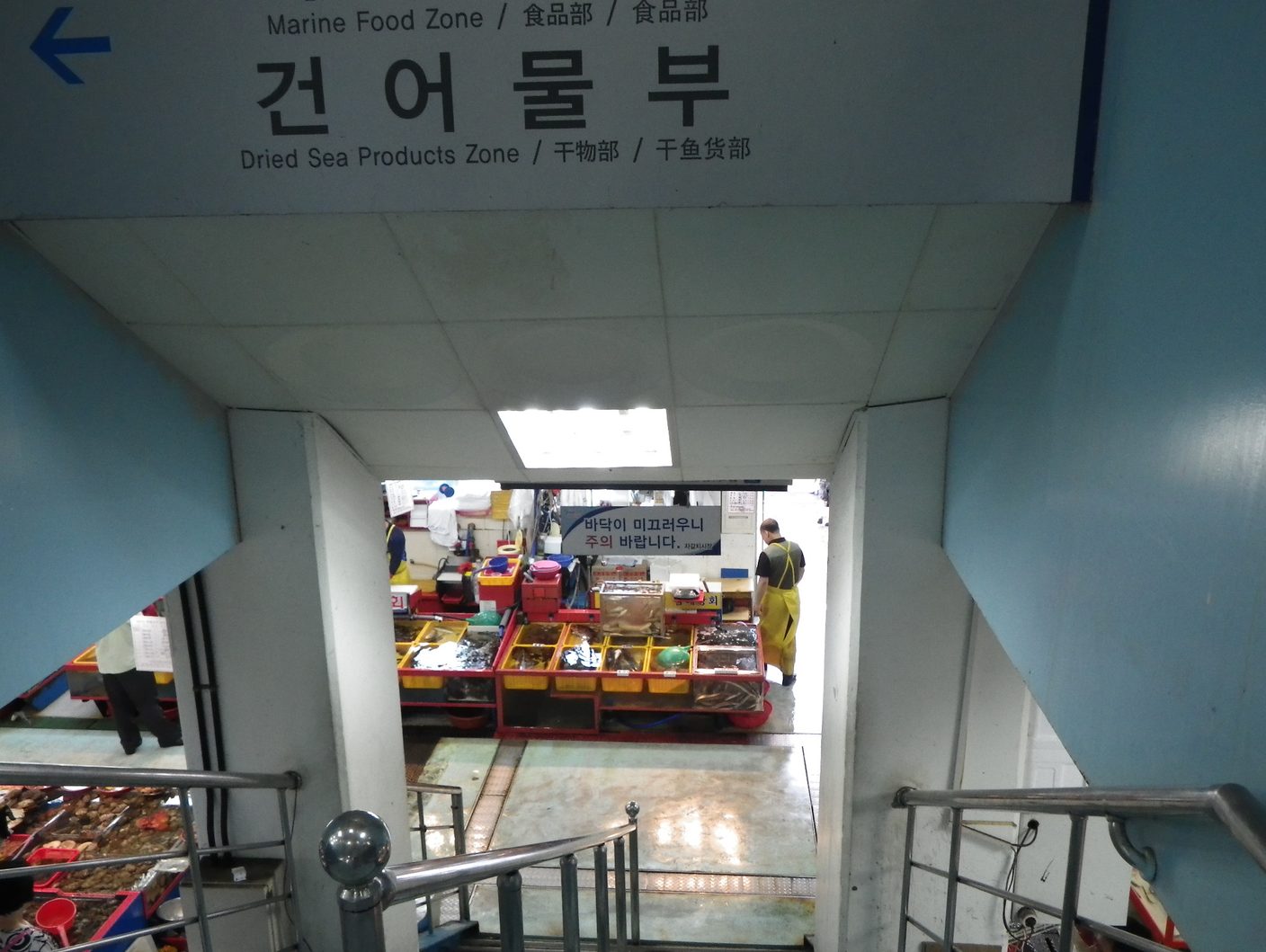
- The dried goods. A separate zone, signposted, and the part visitors walk past. Dried anchovy, squid, seaweed — it smells like the inside of a pantry rather than a fish market, and it is where you buy something you can actually carry home.
- The cleaning. Choose your fish on the ground floor and the seller guts and cleans it in front of you. That is the transaction here — you are buying from the person handling it, not from a counter.
Oiso, boiso, saiso
The market's own slogan is oiso, boiso, saiso — come, see, buy — in the Gyeongsang dialect, which is blunter than standard Korean and sounds it.
It is worth knowing because it describes an actual sequence rather than a welcome. You are expected to look before you commit, and looking is not rude. What is rude is photographing a stall you have no intention of buying from, which is the single most common way visitors annoy people here.
Getting there
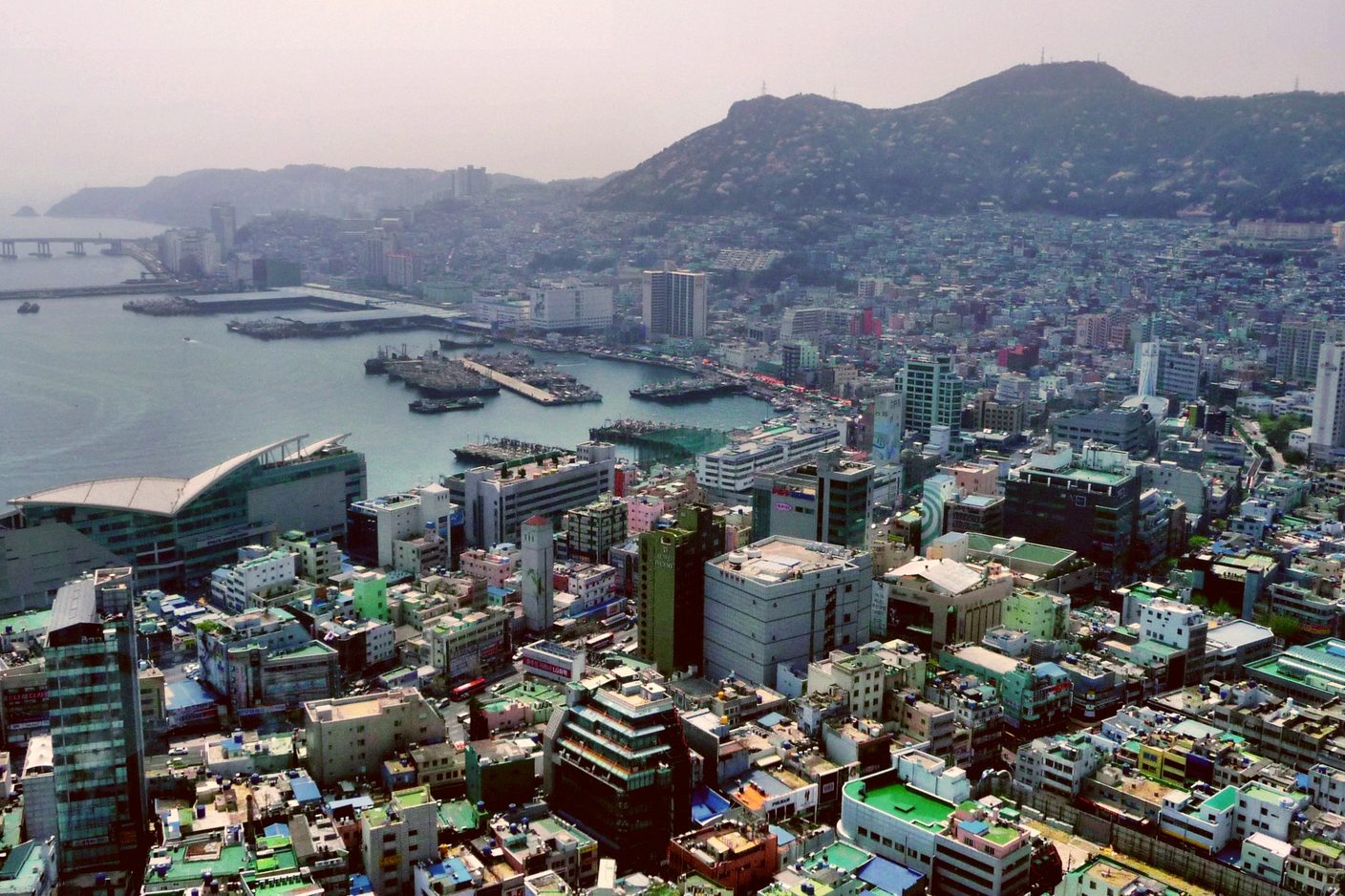
The market is at 52 Jagalchihaean-ro, in Jung-gu, on the water at the southern edge of the old city centre.
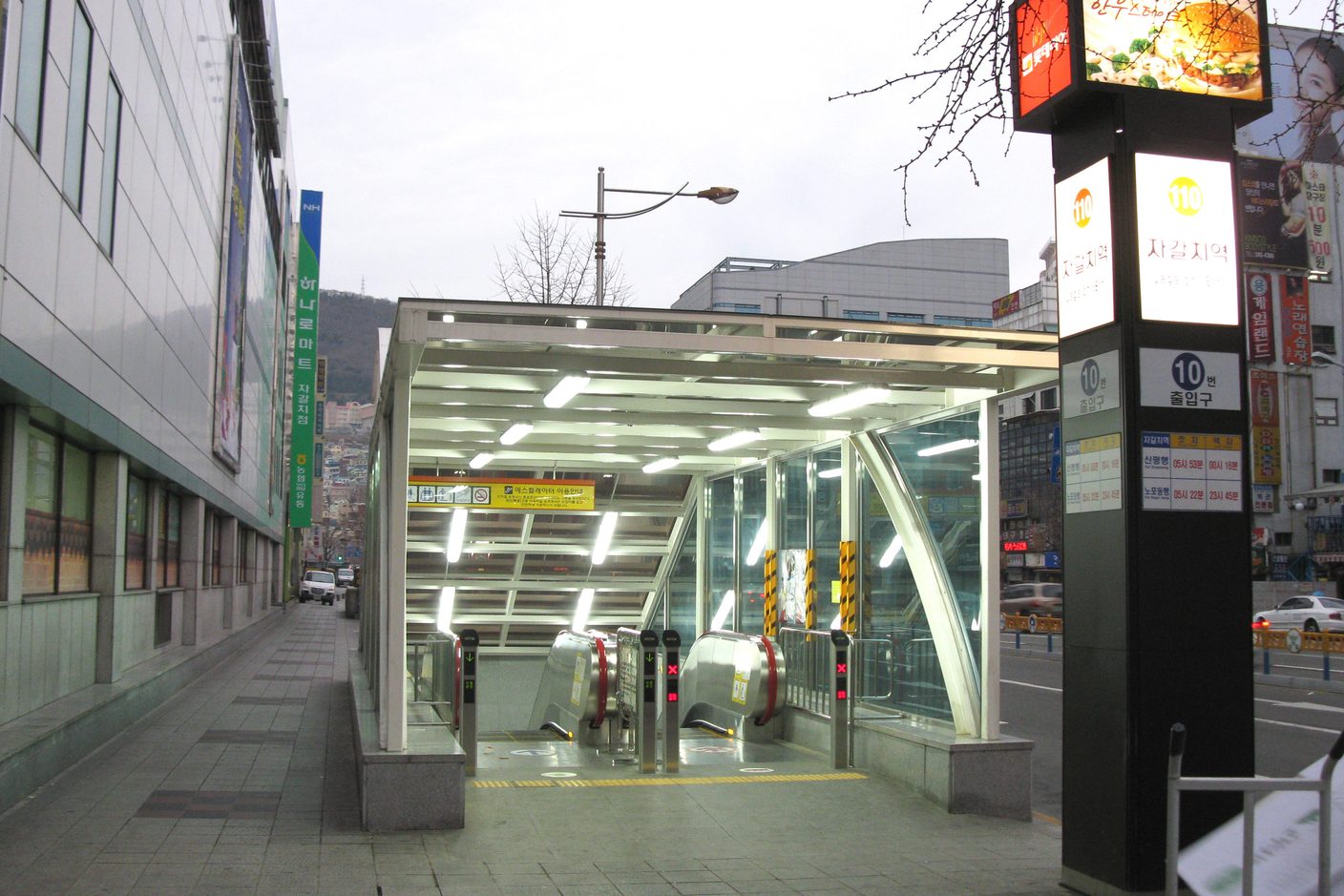
Take Busan Metro Line 1 to Jagalchi Station and leave by Exit 10. Nampo Station Exit 2 also works and drops you nearer the Gukje Market end. That is worth knowing if you mean to do both, and most people should — they sit in the same quarter and they are completely different markets: one sells what came off a boat this morning, the other sells everything else.
The market runs 05:00 to 22:00. It closes on the first and third Tuesday of the month, and Visit Busan lists the fifth as well. The two official sources disagree on that last one, so if you are travelling on a fifth Tuesday, call ahead.
When to go
Early, and earlier than you think. The market opens at five, and the first two hours are the reason the rest of it exists. You will be the only visitor and nobody will mind, because everyone is working.
Mid-morning is the sensible compromise: still busy, still being restocked, and the second-floor kitchens are open. Late afternoon is the most photographed and the least interesting — the wholesale day is finished and what is left is a shopping aisle.
Avoid the first and third Tuesday. That is not a preference; the market is shut.
How we help
Jagalchi is on our Busan Highlights full-day route alongside Gamcheon Culture Village, Haedong Yonggungsa and the Sky Capsule at Gwangalli. It is also the anchor of the Markets & Food half day, which pairs it with Gukje and Bujeon and includes tasting along the way.
A market rewards arriving at a particular hour, and that hour is inconvenient. A private car is what makes an early start a decision rather than a negotiation with a timetable, and the day is planned with you rather than handed to you.
Tell us your dates and how much time you have, and we will build the day around what you actually want to see.
Header photo: Kok Leng Yeo, CC BY 2.0, via Wikimedia Commons, cropped. Address, hours and closing days per Visit Busan and the Korea Tourism Organization, which differ on whether the fifth Tuesday is a closing day. Name origin, wartime history and the Jagalchi ajumma per the same two sources; the seagull reading of the building per the market's own site. Details can change, so check before you set out.